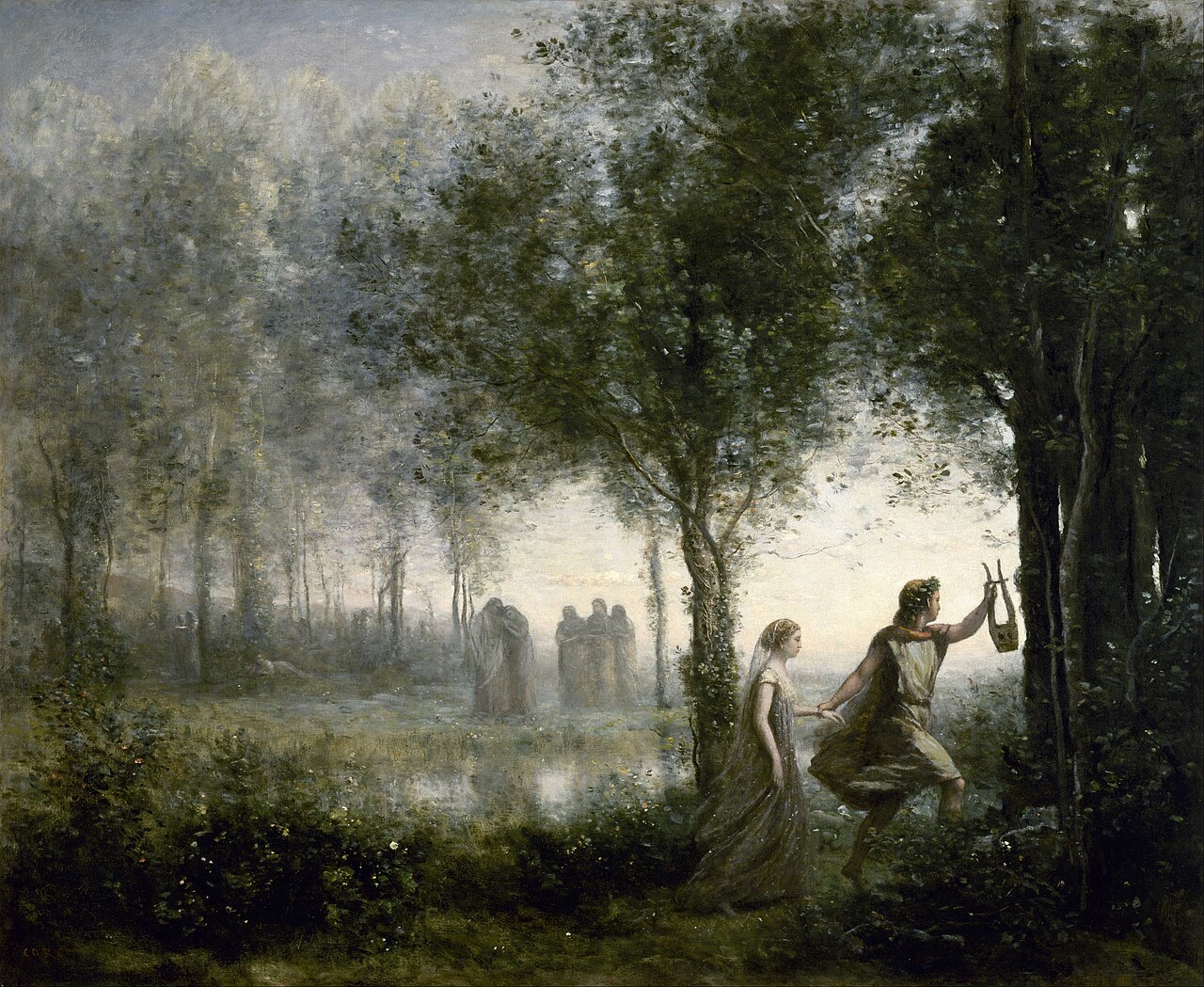
There is a recurring comment I see in spiritual spaces online. Someone has been practicing for years — meditation, shadow work, ceremony, study. They are sincere. They are serious. And yet they write, with exhaustion threaded through every word: I just want this to be my last life. I don't want to come back. I've done everything right and I'm still suffering.
I understand that feeling. I also want to name what I see in it. Because I think that desire — that specific longing to escape the cycle — may be the very thing perpetuating it.
The Road to the Underworld Begins With a Choice of Springs
The Orphic gold tablets are among the most extraordinary artifacts of the ancient world. Thin sheets of hammered gold, buried with the dead — inscribed with instructions for navigating the afterlife. A roadmap pressed against the body at the threshold.
When the soul arrives in the underworld, it will encounter two springs. On the left, the spring of Lethe — of forgetting. On the right, the spring of Mnemosyne — of memory. The guardians will try to direct you toward the left. You must resist.
I am a child of Earth and starry Heaven. My race is heavenly. You speak your origin. You claim your nature. You drink from memory instead of forgetting.
What the tablets don't say — what I think lives between the lines — is that the ones who are truly free are not the ones desperately avoiding the spring on the left. They are the ones who could drink from either spring without being compelled by either.
What the Tibetan Tradition Understood About Compulsion
The Bardo Thodol — the Tibetan Book of the Dead — maps this same territory. In the third bardo, consciousness begins to feel the pull toward rebirth. Around it, the six realms glow in dim, soft lights. The human realm appears as a gentle blue. And consciousness is drawn toward it — not because it is forced, but because the soft light is familiar. The brighter lights — the lights of liberation — feel blinding. Terrifying. Too much.
So consciousness flinches away from the vast and chooses the manageable. Again.
It is not the returning that indicates spiritual failure. It is the compulsion of the return. The bodhisattva may choose to return — not because karma pulls them back, but because love does.
The Sophisticated Trap
When liberation becomes escape, practice becomes avoidance. Not ordinary avoidance — this is sophisticated avoidance. You can spend decades in genuine discipline, accumulating real insight, developing real capacity — and organize all of it around a fundamental rejection of existence.
The entire technology of both traditions is aimed at one thing: the transformation of unconscious compulsion into conscious relationship. That's it. That's the whole practice.
Drinking From Memory While You're Still Alive
The spring of Lethe is not waiting for you at the end of this life. You drink from it every time you react without witnessing yourself reacting. And the spring of Mnemosyne is available right now. In meditation. In contemplation. In the deliberate practice of remembering — not facts, not history, but what you are.
Both. Earth and Heaven. Embodied and vast. Not here by mistake. Not trapped. Here by a momentum that can become, through practice, a choice.
What Liberation Actually Looks Like
The ones closest to genuine liberation are not the ones in a hurry to leave. They seem, somehow, genuinely at home here. Even in suffering. Even in difficulty. Because the freedom they've found is not freedom from life. It is freedom within it.
Drink from the spring of memory. While you're still here to do it.